“All organizations are perfectly designed to get the results they get” - W. Edwards Deming
When a startup finds product market fit, the conversation inevitably shifts from “have we built a product that people love and are willing to pay for?” into “how do we get this in the hands of more people?”, “how do we clean up all the shortcuts we took to get here?” and inevitably, “how do we reach a scale that makes us profitable?”.
The priorities of the organisation splinter. The founder who was once the sole driver of the customer vision now has to juggle a multi-faceted strategy: capitalise on early success, hedge against new risks and keep a growing C-Suite aligned. Usually at this stage, experienced leaders have been brought on to handle these concerns but the connective tissue that binds it all together is often missed and as such, the organisation as a whole can’t keep up.
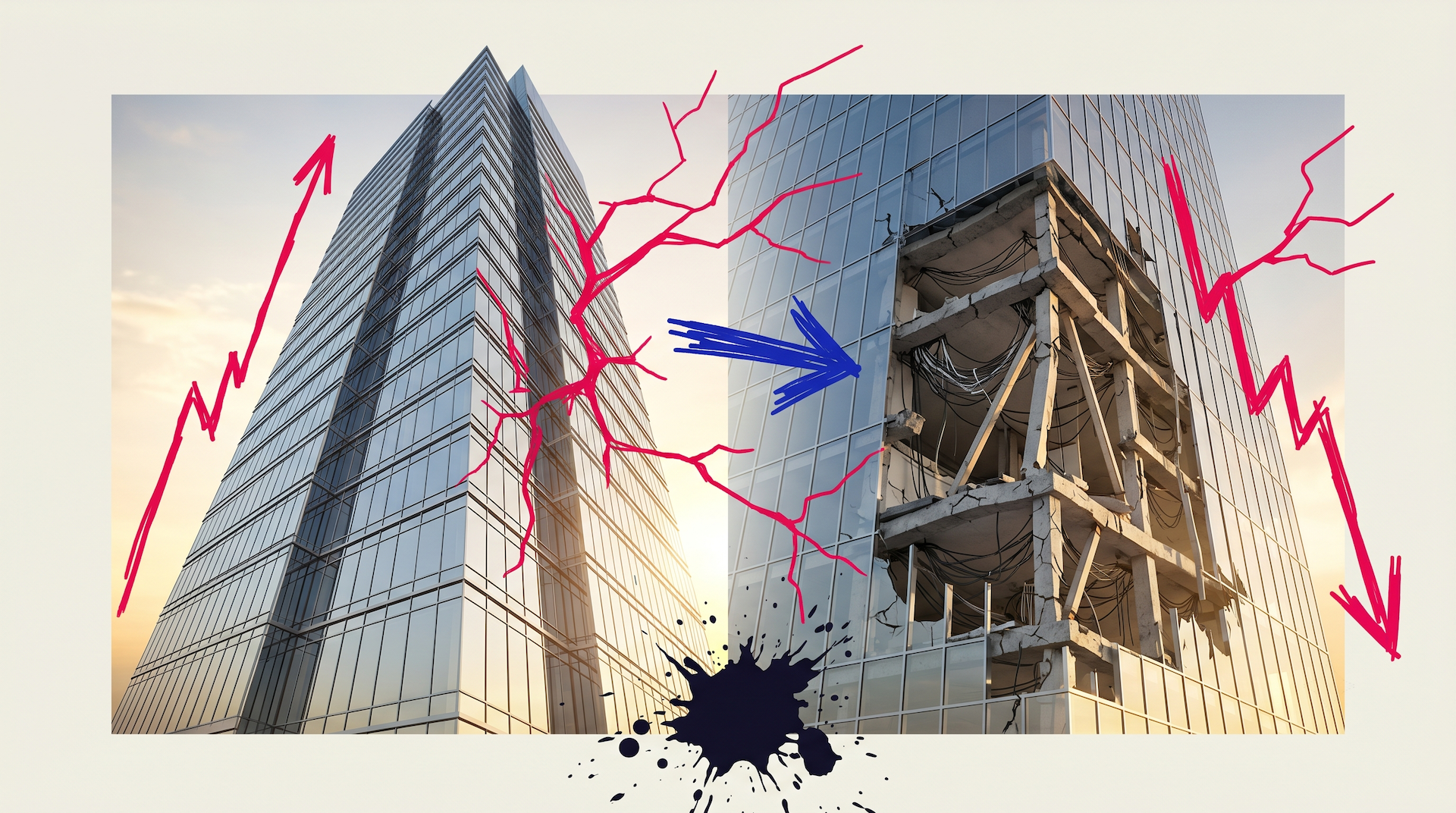
I call this “organisational entropy” - the structures, processes and culture of an organisation becoming less effective as the needs of the organisation evolve whilst the organisation itself stays relatively unchanged. At the same time, often the organisation hires like crazy to keep up with demand. Fundamentally, the organisation's operating model is not aligned to where the company is at in terms of their lifecycle.
I saw it play out at a major subscription-based dog food company experiencing massive growth. They hired a CPTO, Product Managers and Software Engineers - investing in product growth, tech debt, supply chains and developer productivity. But what hadn't changed was team structures, processes and culture.
There were siloed teams: a Product team navigating competing priorities from leadership and a large engineering team with a manager struggling to delegate work to the engineers. What had worked when the founder directly led a small team, was now a mess. Prioritisation was “whatever the founder says” and with what was left, “whatever the product managers agree on” - filtered by the engineering lead to ensure the bare minimum of maintenance got done.
The result was tech debt, burnout and bottlenecks. Product Managers with unclear roles and little agency. A founder frustrated with a slowing speed to market and diminishing results.
Few people love re-orgs, but this is what happens when you don’t tend to the holistic structures and processes of your organisation.
As an advisor, I helped them re-structure around business priorities - mapping the splintering of needs onto empowered product teams to minimise dependencies and create focus for teams and the people leading them. An important first step, but not the whole answer.
Addressing organisational entropy
It starts with strategy. Is it coherent and actionable? Can it enable your teams to say no to requests because they're not strategically aligned? Is it informed by real data and insights?
Then: do you have teams with clear missions and success metrics that enable them to move at speed, minimise dependencies and focus on the most pressing problems? And when dependencies exist, do you have processes to visualise, prioritise and align on work in service of larger goals?
Finally, "move fast and break things" goes out of vogue at scale, you need standardisation. At Spotify, we saw wildly inconsistent approaches to engineering and decision-making that stretched well beyond what team autonomy can reasonably justify. On the Desktop client alone, there were close to ten different ways to write unit tests. Every new hire or team change required slowing down to learn a new framework. Engineers across the company eventually got together to standardise on tooling - and improved quality, speed to market and cognitive load in one move.
Who owns this in a post-Agile world?
When I speak to Product leaders, they often see the problems but are too busy to focus on fixing them. Sometimes Engineering leads will tend to some of these issues, particularly around engineering standardization. COO roles tend to focus on financial operations, rather than product structures, culture and operationalising strategy. But these challenges are an interconnected system. Change one component and you affect the others.
This used to be the role of the Agile Coach or Organisational Coach. These roles have fallen massively out of favour, particularly in startups and scale-ups, often for good reason. What started as a cultural revolution, software people pushing back against traditional waterfall methods, became a money-making industrial complex. Large consulting firms selling silver bullet solutions like SAFe or “the Spotify Model”, often delivered by people with no experience working inside the kinds of organisations they were attempting to transform.
I’m an Agilist at heart, but it’s the culture of continuous improvement and systems thinking that motivates me, not the ‘capital A’ Agile frameworks. That distinction matters because these roles have left a void. As a company grows, so does organisational entropy. Who will be the next generation of people solving these challenges?
When I was an Agile Coach at Spotify, our formal mission was to help teams reach high performance. In practice, much of our work was softening the blow of constant growth and change. I believe having systems thinkers regularly stepping back - asking whether the system was conducive to the results the company wanted - was an important and underappreciated factor in what people now call "the Spotify Model".
This is what I do for a living. The label still escapes me. "Advisor" or "consultant" is too vague. Anything with "Agile" in the name will turn off most progressive scale-ups. Even "coach" evokes, for some, a hands-off practitioner who asks powerful questions but never gives actual direction.
What needs to change
With AI disrupting the pace of delivery and how we work, organisations need to adapt now more than ever - to shifting expectations from markets, investors, customers and employees.
Three things stand out:
1. Sense-making models over prescriptive frameworks.
2. Product thinking as a capability that informs both strategy and organisational development.
3. Systems-thinking roles with a genuine seat at the leadership table - someone whose job is to represent the whole system and ask what needs to change to optimise it.
And above all of that: buy-in from the CEO or founder that this is just the nature of work now. An ever-evolving, emergent system that adapts to constant change within the context of sustainable growth.
Because the alternative is entropy. And entropy causes deterioration - quietly at first, then suddenly. Tech debt, burnout, churn, reduced speed to market and poor decisions compounding into poor results.
The question isn't whether entropy is happening in your organisation. It's whether you're addressing it intentionally, or waiting until the pain becomes undeniable.